About

Vittorio Russo

Director and cinematographer. Short films, music videos, and a parallel path in independent cinema.

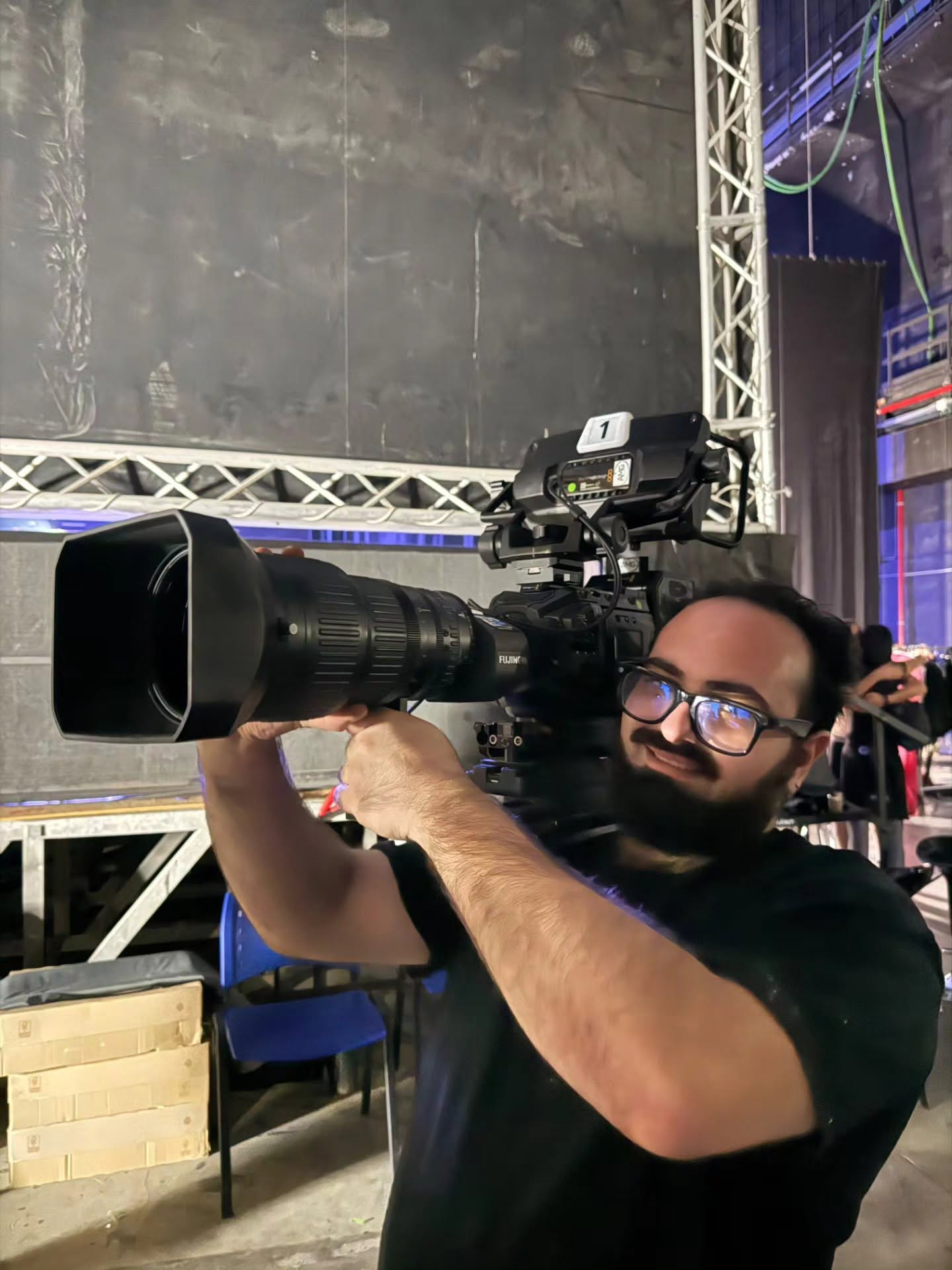
Vittorio Russo on set with a camera. Photograph supplied by him; the file does not name the project.

Chapter 01

The beginning

He trained in film and television production. The paths below are the ones he has named.

Training

  • ITS Roberto Rossellini advanced diploma, Videomaker for cinema, TV and the web — 2019.
  • Directing and screenwriting programme, Roma Film Academy — 2022.
  • Directing courses at Massimiliano Bruno’s Laboratorio di Arti Sceniche — 2021–2023.
  • Training in audiovisual technique, VFX and motion graphics at Cine-TV Roberto Rossellini.

Names and years are as supplied by the director. The full CV he provided downloads on this page.

Chapter 02

Behind the camera

He has worked on sets, documentaries and audiovisual projects, across directing, photography, camera and post. Alongside that he has worked as a camera operator, videomaker, colourist and audiovisual technician.

The technical CV supplied by the director downloads here. It includes live direction and signal management for events. Clients are not listed on this page.

Download technical CV

Chapter 03

Finding a language

Vittorio Russo is an Italian director and cinematographer. His path crosses independent film, production and cinema research. Alongside shorts and music videos he has spent years building room for independent cinema: a festival, a magazine, writing workshops.

Chapter 04

Cinema as a collective experience

From 2022 to 2026 he was, by his own account, president of Jolly Roger Arts & Crafts APS for about four years. The association supports independent filmmakers. In that period he organised and artistically directed the first two editions of the Etruria Film Festival.

He edited Critica della Ragion Cinematografica, a print journal and a blog, and ran La Brigata Narrante, a writing circle, along with screenings and evenings on directors.

Chapter 05

What comes next

The work he is pursuing now is directing and cinematography.

Director's perspective

A way of looking

Editorial draft, pending the director's approval.

The path has gone through the camera, the edit, photography, writing and the work of organising a film culture.

Those years shaped an interest in how images make meaning.

Cinema, here, is a language and also a collective process: different eyes and skills meeting inside one work.

Technical training is a way to make the visual choices of a story on purpose.

Directing and cinematography are where that research goes next.

YouTube